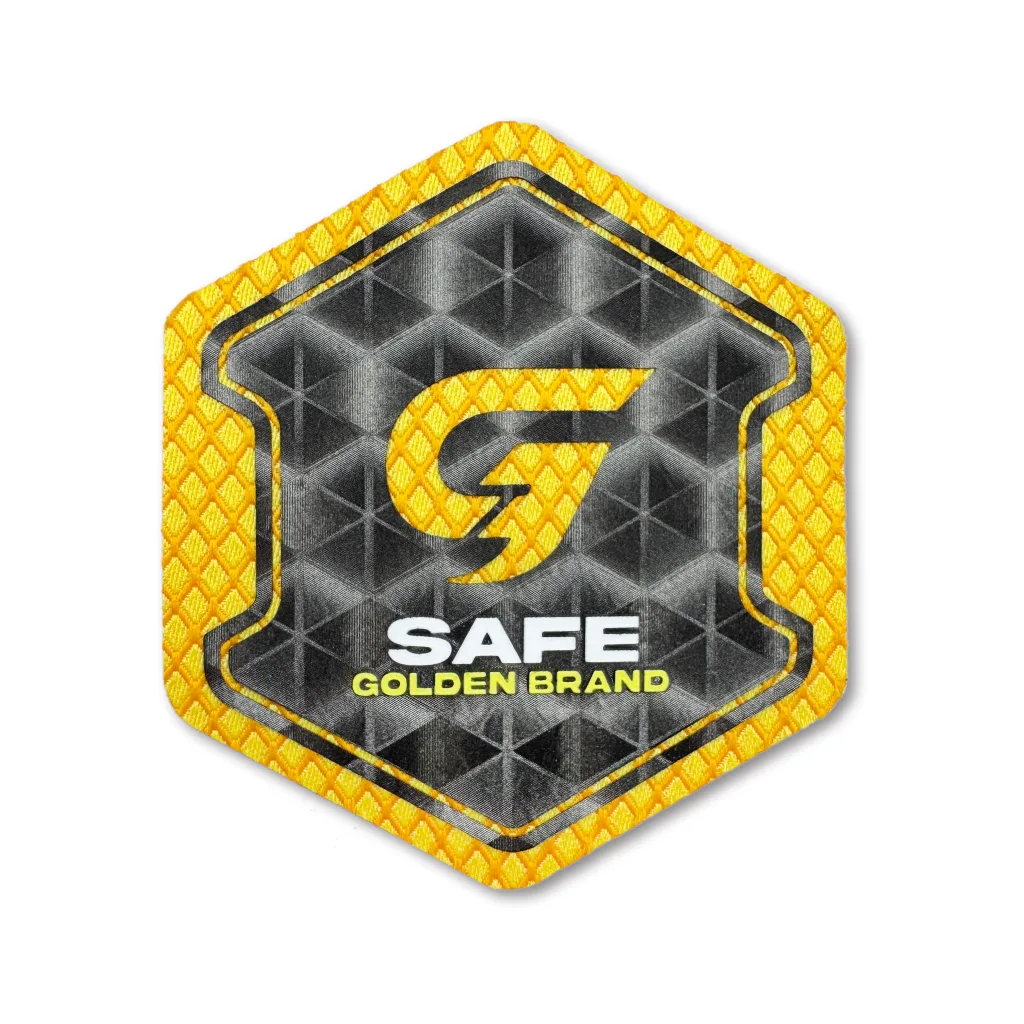
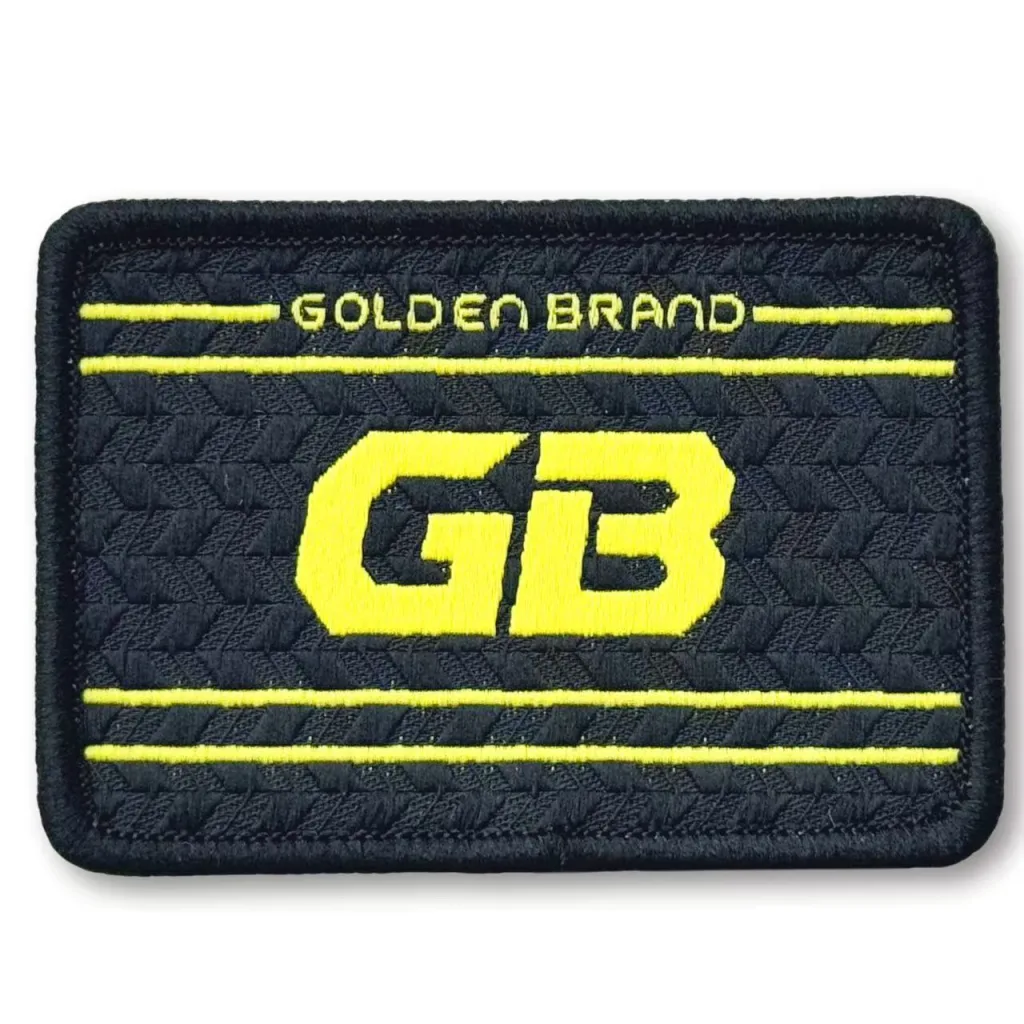
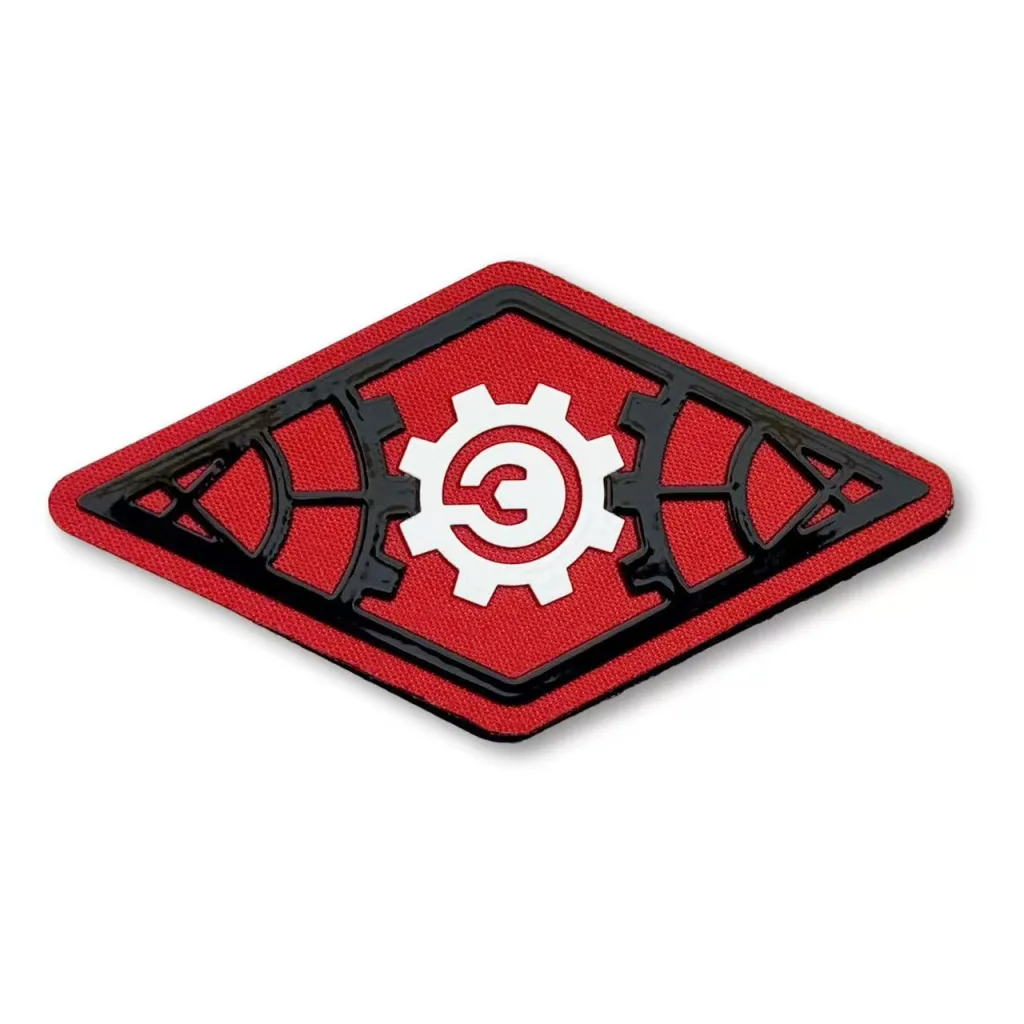
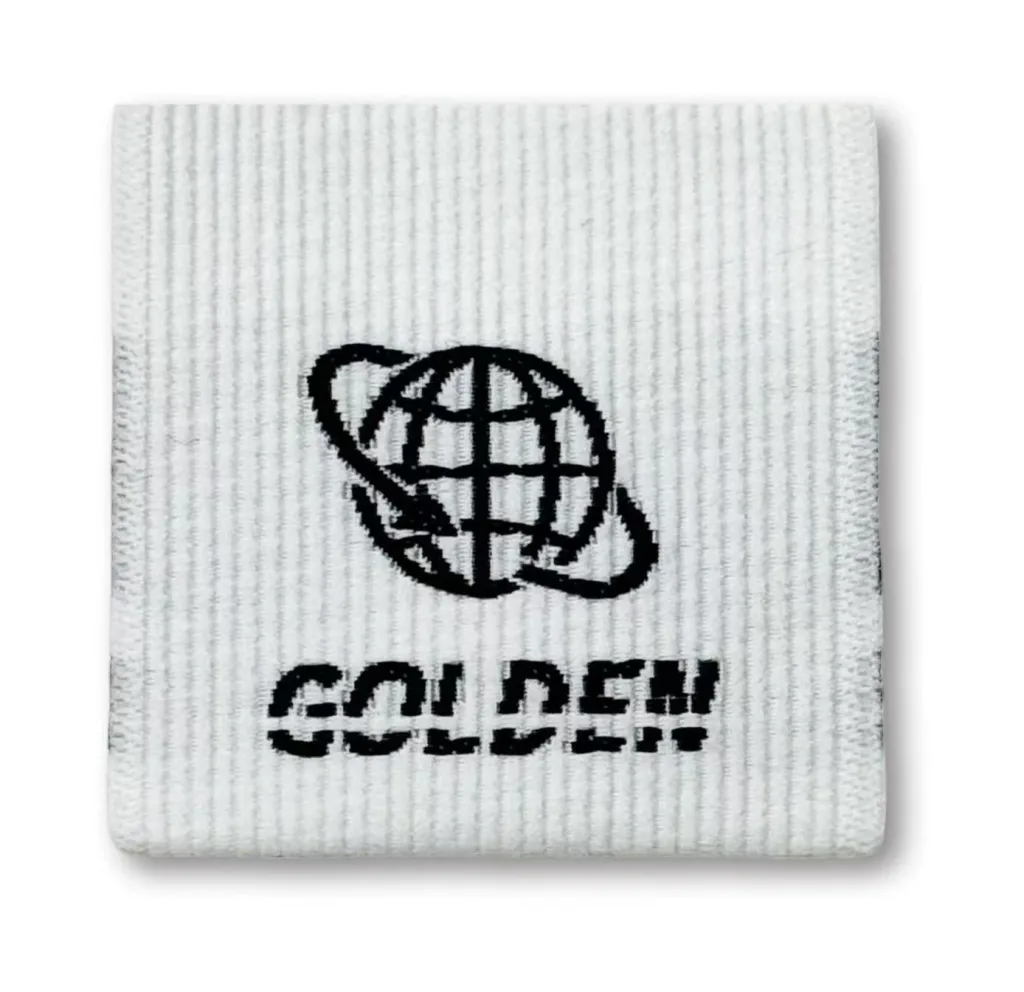
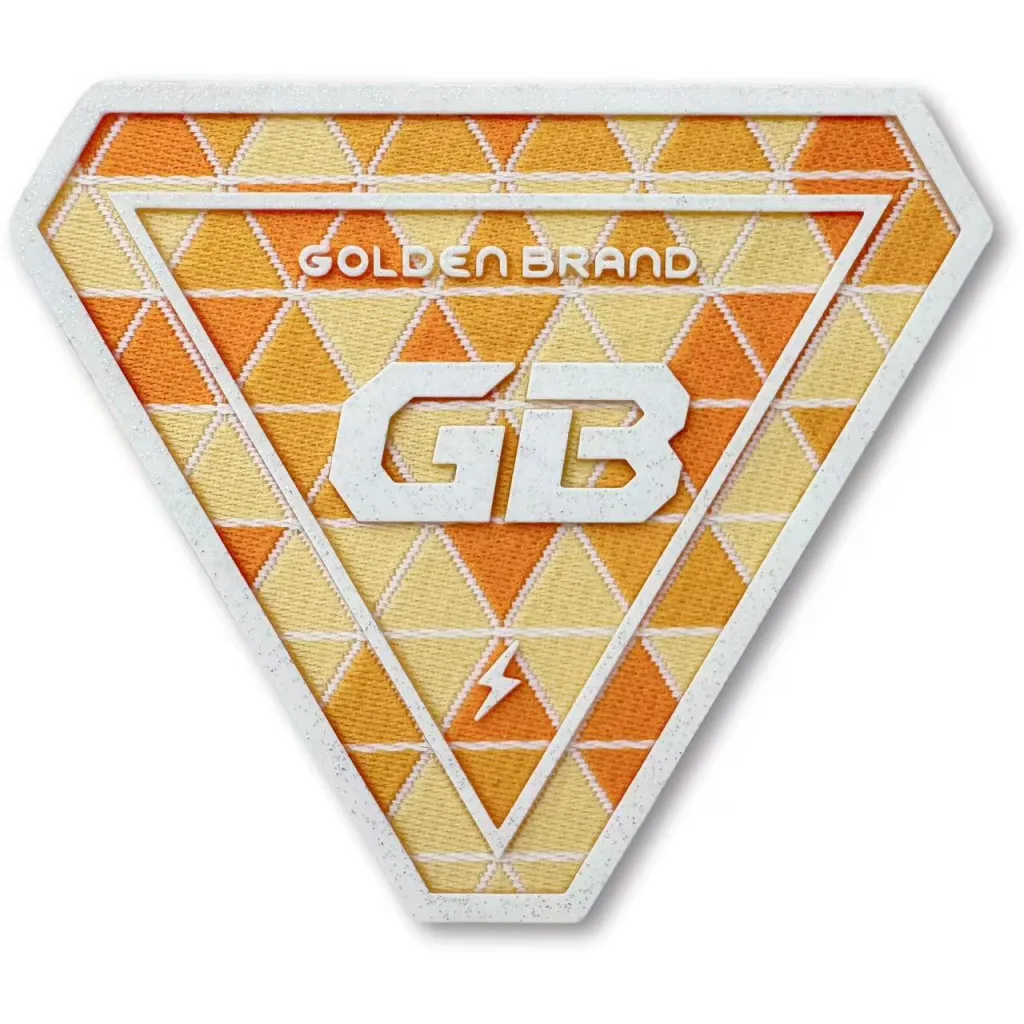
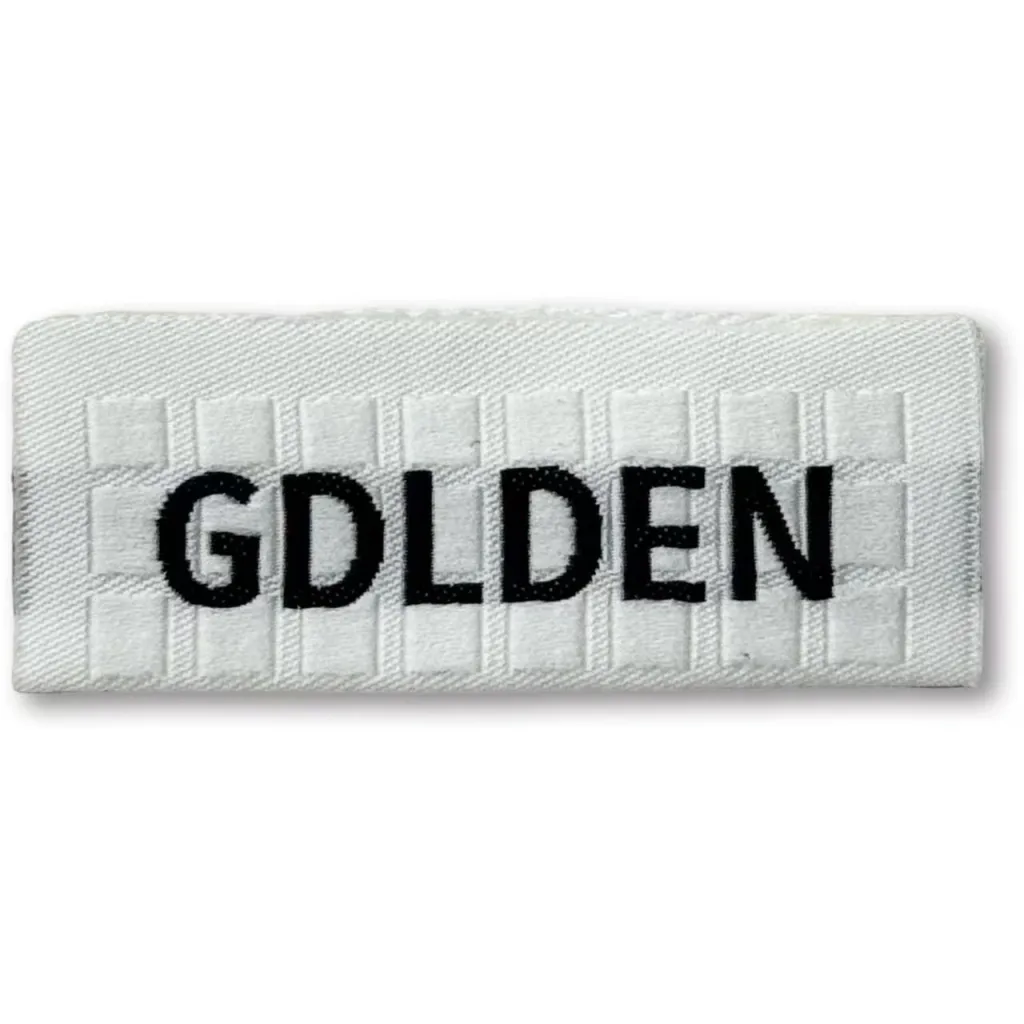
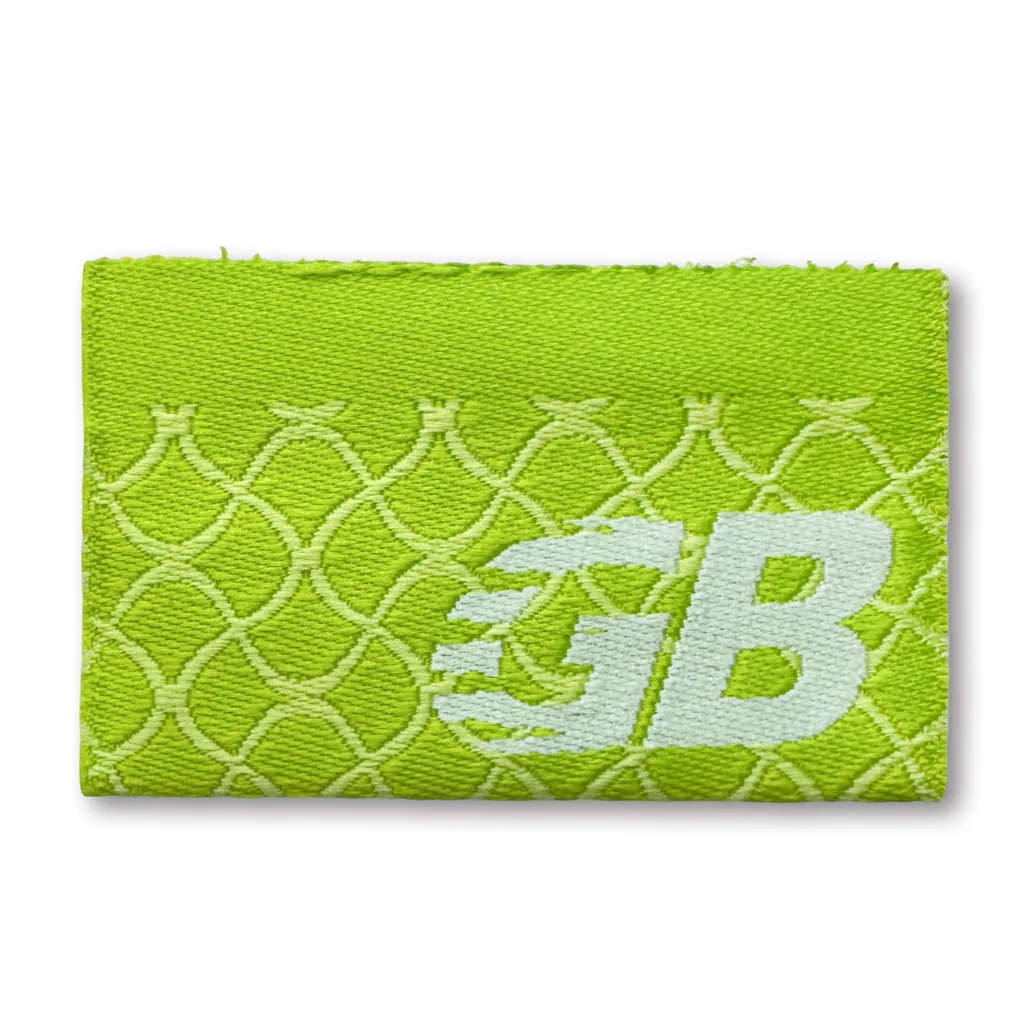
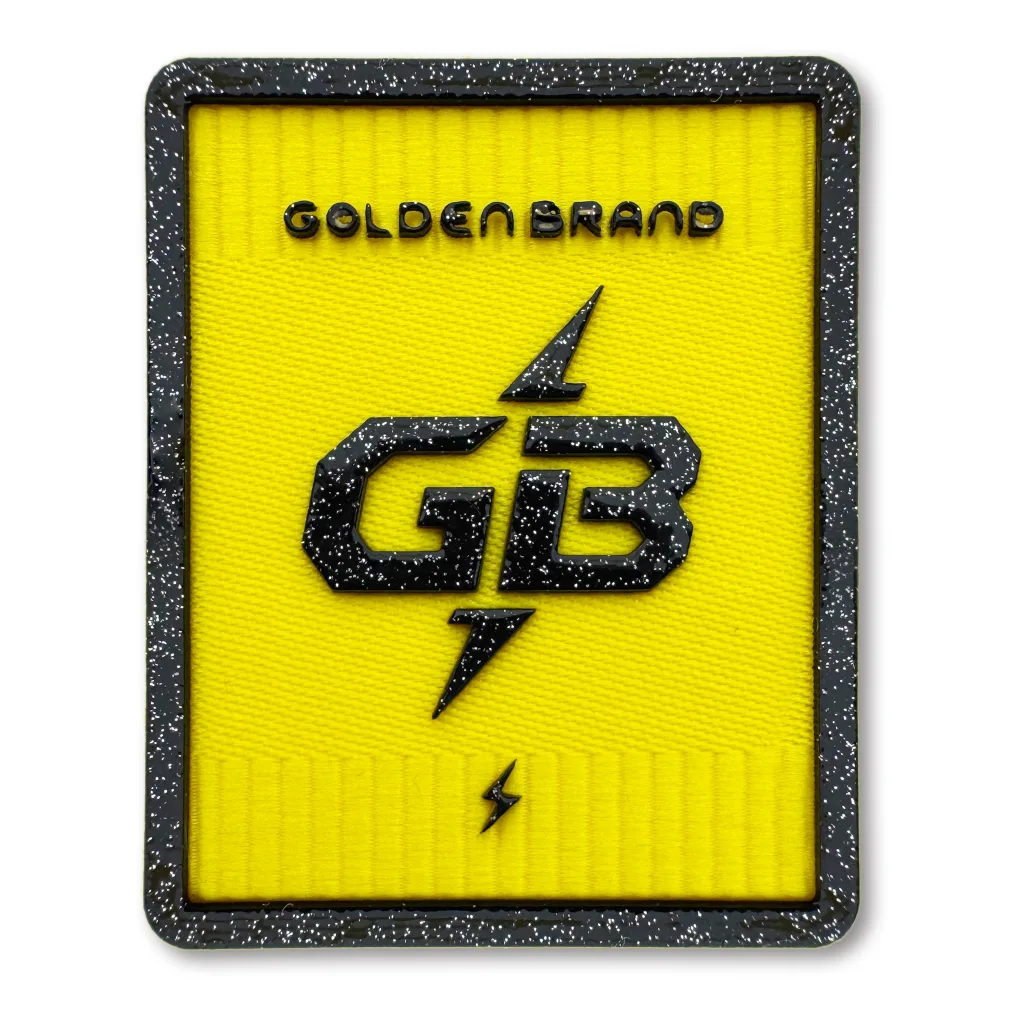
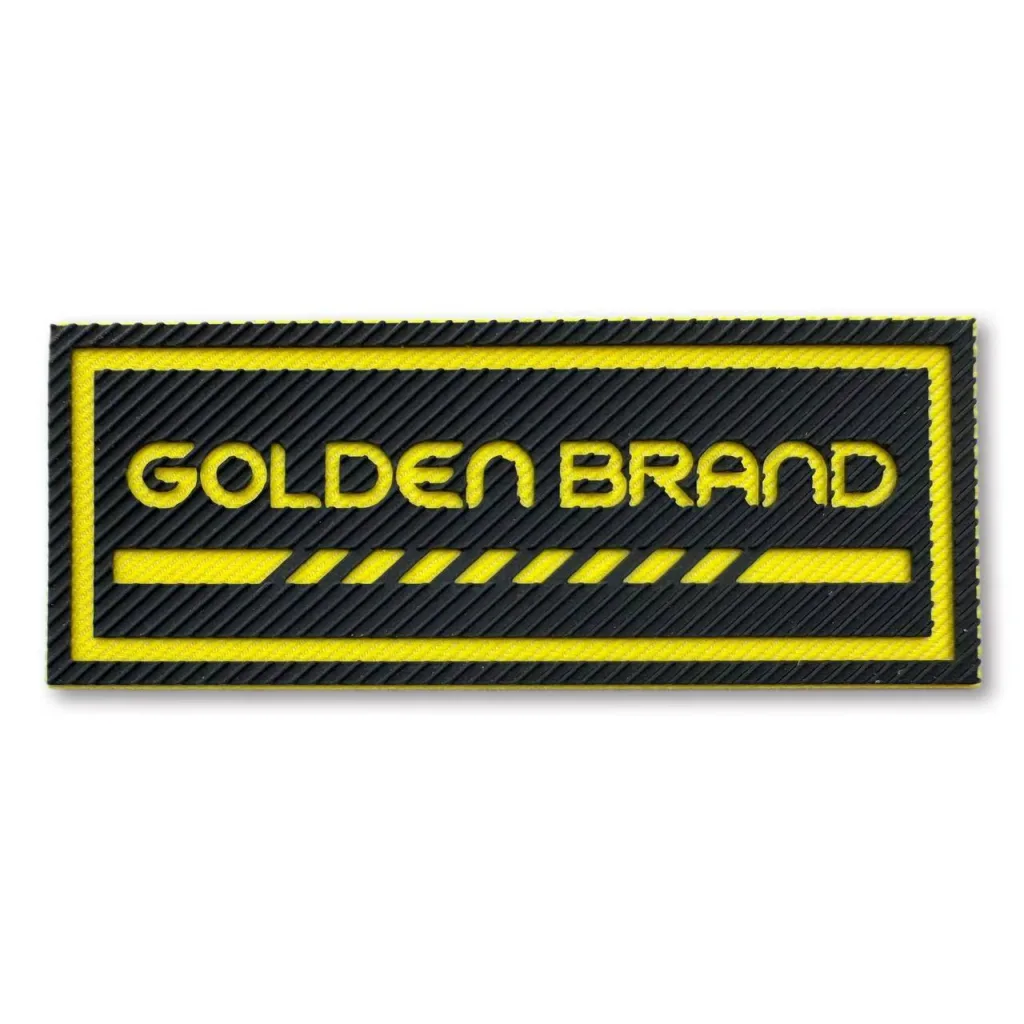
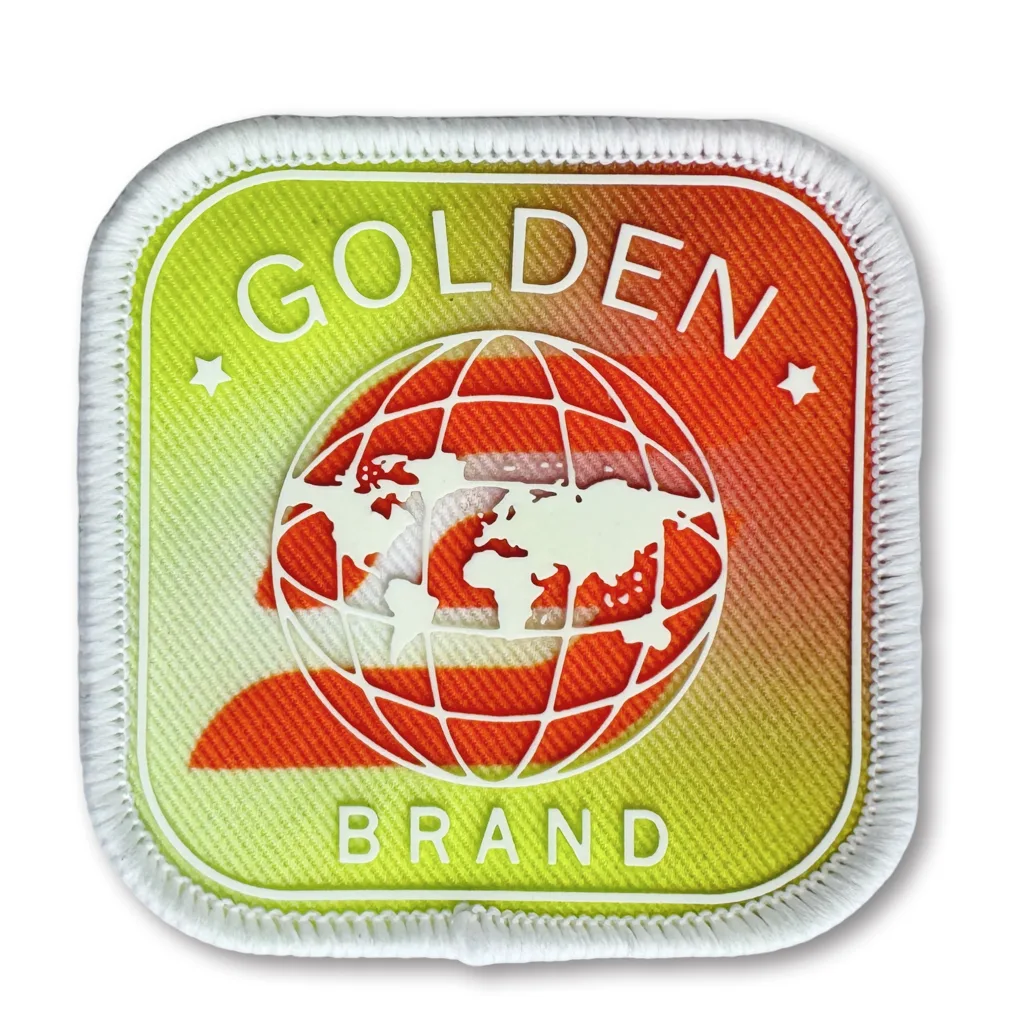
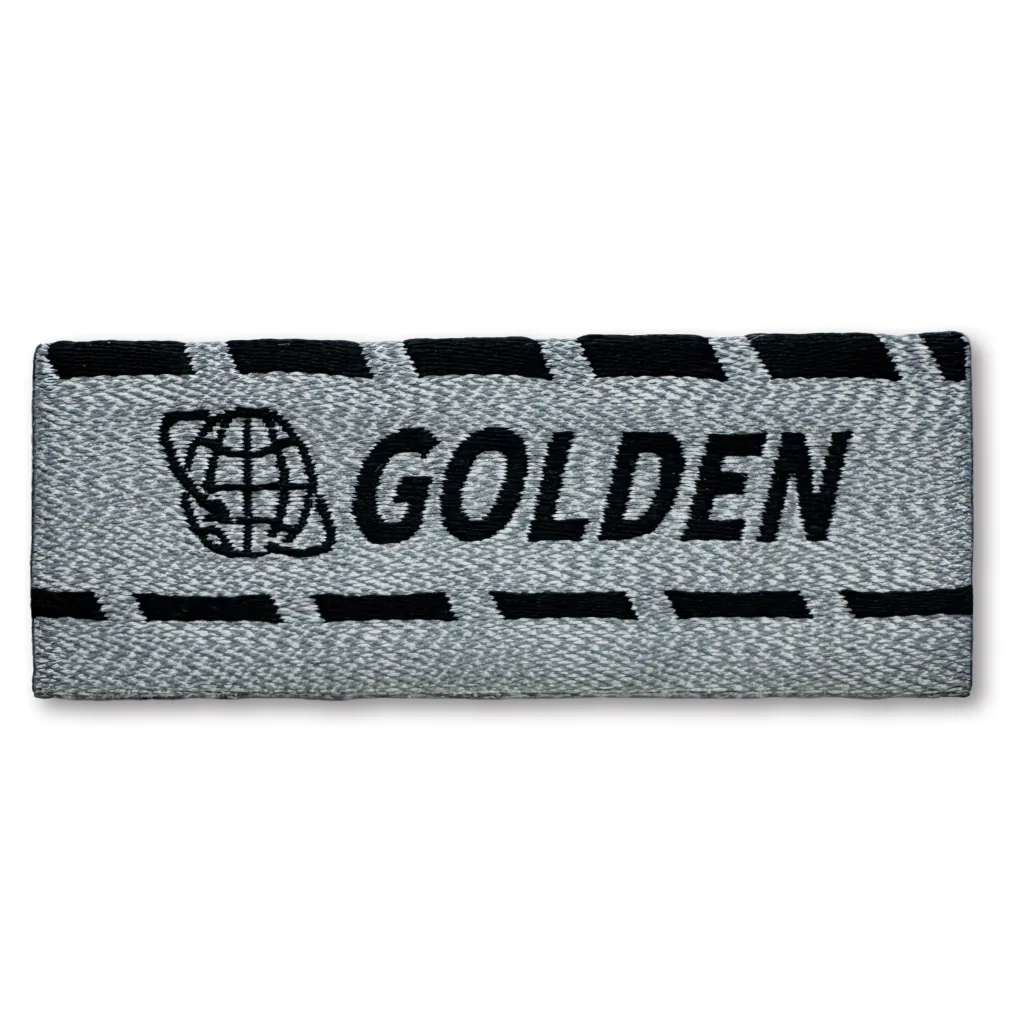
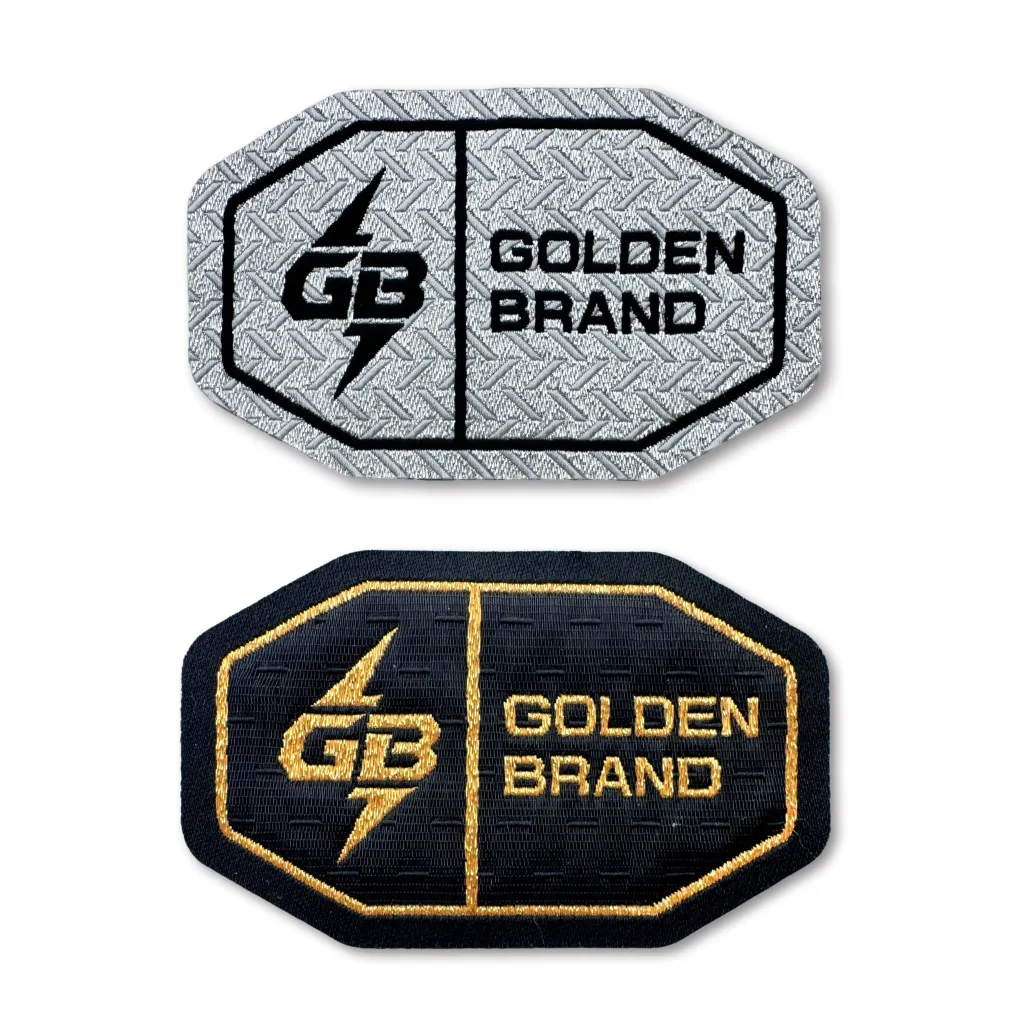
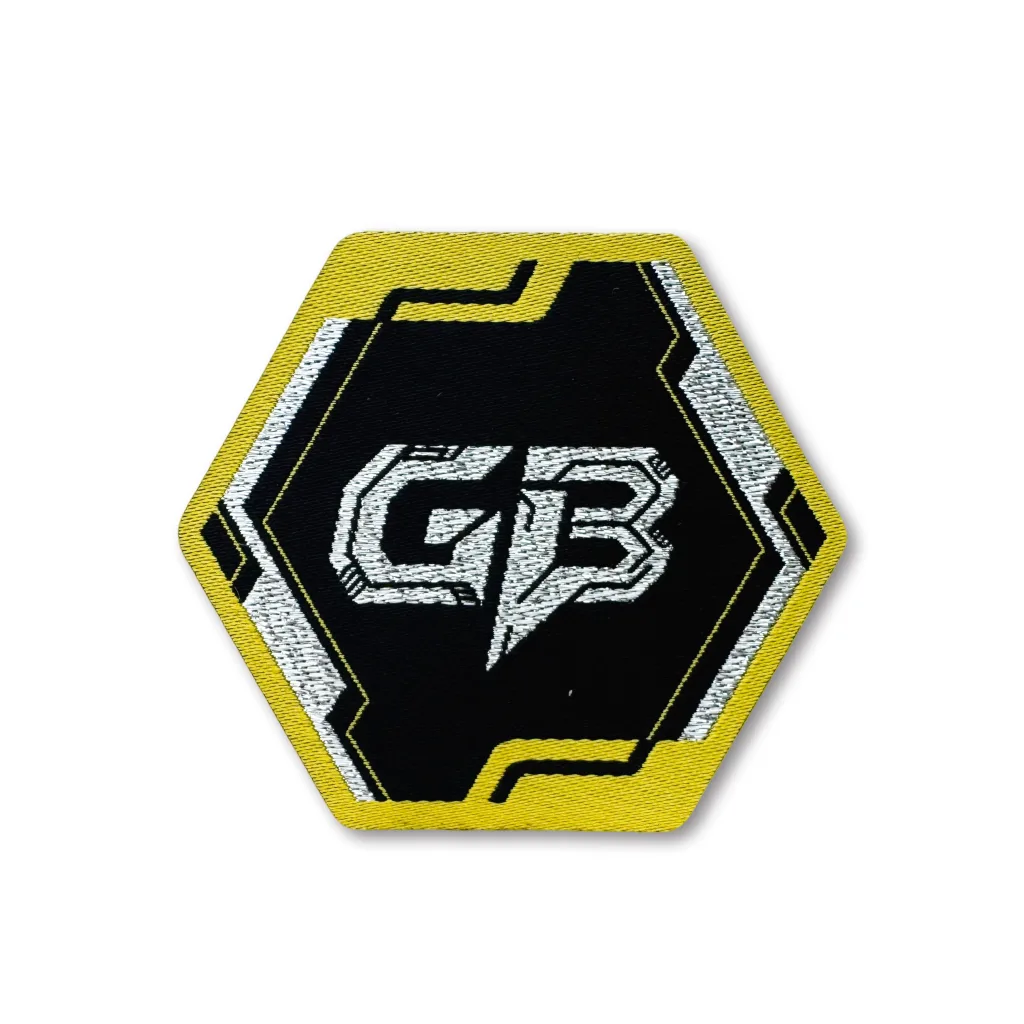
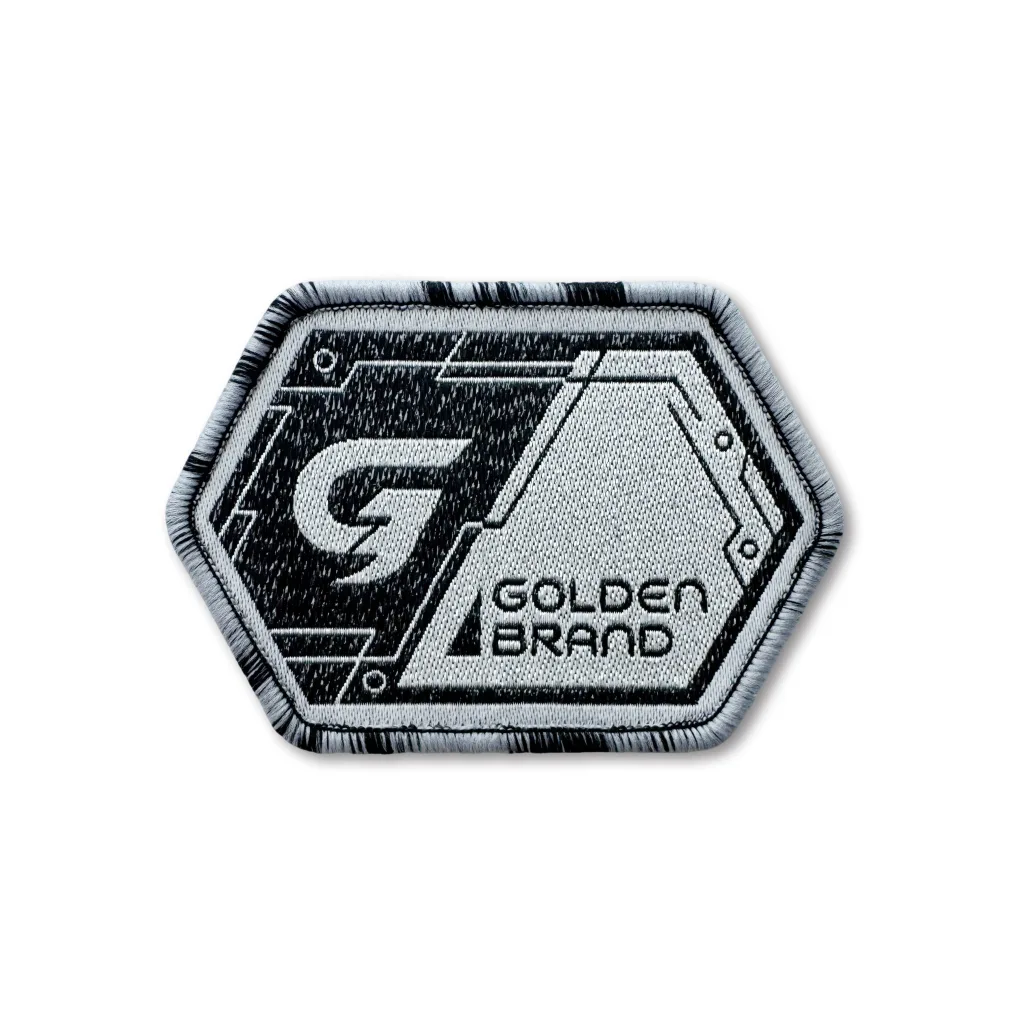
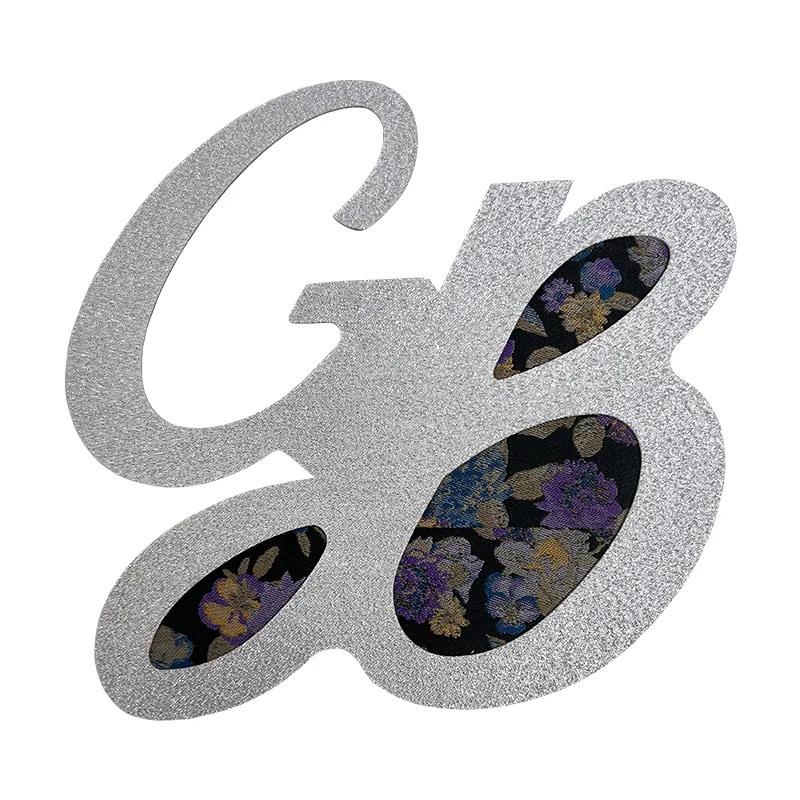
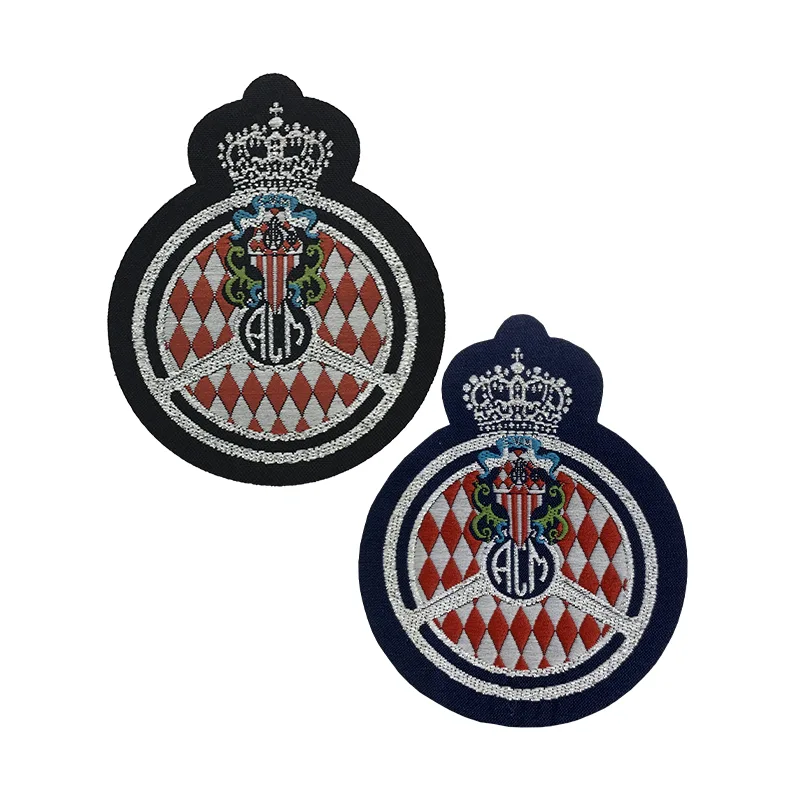
Our collection of badges is crafted with precision and care, utilizing metallic yarn to add a touch of luxury and elegance to your brand. Let’s explore the unique features, advantages, and applications of Metallic Yarn Woven Badges, setting your brand apart with style and durability.
1.Product Features:
- Luxurious Metallic Finish:
Our badges are woven with metallic yarn, giving them a luxurious sheen and luster that stands out from traditional woven badges. The metallic thread adds a touch of elegance and sophistication to your brand’s logo or design.
Built to last, our Metallic Yarn Woven Badges are made with high-quality materials and craftsmanship. The metallic yarn is resilient and long-lasting, ensuring that your badges maintain their beauty and integrity even after repeated wear and exposure to the elements.
We offer fully customizable designs, allowing you to create badges that perfectly represent your brand’s identity and values. From intricate logos to detailed artwork, our skilled artisans can weave your design into stunning Metallic Yarn Woven Badges that leave a lasting impression.
Whether used for branding, promotion, or identification, our badges are versatile accessories that can be applied to a wide range of products and garments. From clothing and accessories to bags and promotional merchandise, Metallic Yarn Woven Badges add a touch of sophistication to any item.
Our collection includes a wide range of options to suit your specific needs and preferences. Choose from different shapes, sizes, and colors to create badges that reflect your brand’s aesthetic and style.
2.Product Advantages:
The luxurious metallic finish of our badges elevates the overall aesthetic of your products and garments, adding a premium touch that captures attention and enhances perceived value.
- Durable and Long-Lasting:
Built with durability in mind, our Metallic Yarn Woven Badges are resistant to fading, fraying, and damage from everyday wear and tear. Your brand’s logo or design will remain vibrant and intact for years to come.
The distinctive appearance of our badges helps increase brand recognition and visibility, making them ideal for promotional purposes and marketing campaigns. Whether worn on clothing or attached to accessories, Metallic Yarn Woven Badges serve as powerful brand ambassadors.
With fully customizable designs, you have the flexibility to create badges that align with your brand’s identity and messaging. Whether you prefer a classic logo or a unique artwork, our badges can be tailored to suit your brand’s aesthetic and style.
- Versatile Branding Solution:
Whether used for uniforms, merchandise, or promotional giveaways, Metallic Yarn Woven Badges offer a versatile branding solution that can be applied to a wide range of products and industries. From fashion brands to corporate businesses, our badges add a touch of elegance and sophistication to any application.
3.Product Applications:
Add a touch of luxury to your clothing line or fashion accessories with Metallic Yarn Woven Badges. Whether applied to shirts, jackets, hats, or bags, our badges elevate the overall look and feel of your products, enhancing their appeal to discerning customers.
Use Metallic Yarn Woven Badges to reinforce your corporate brand identity on uniforms, employee apparel, and promotional merchandise. The premium finish of our badges reflects positively on your brand, conveying professionalism and attention to detail.
Create custom badges as part of your promotional merchandise strategy, offering them as giveaways or incentives to customers and clients. The luxurious appearance of our badges makes them highly desirable items that people will be proud to display.
Enhance the branding of your events, conferences, or trade shows with Metallic Yarn Woven Badges. Whether used as attendee badges, staff identifiers, or promotional items, our badges help reinforce your event’s identity and leave a lasting impression on participants.
Add a premium touch to your product packaging by incorporating Metallic Yarn Woven Badges into your design. Whether used as decorative accents or branded embellishments, our badges enhance the visual appeal of your packaging and make your products stand out on the shelf.
In summary, Metallic Yarn Woven Badges offer a unique combination of elegance, durability, and versatility, making them an ideal branding solution for a wide range of applications. Whether used for apparel, corporate branding, promotional merchandise, events, or packaging, our badges eleva
4. FAQ
4.1 Are woven patches iron on?
Woven patches are typically not designed to be ironed on like some other types of patches, such as embroidered or printed patches. Woven patches are made by weaving threads together to create a design, resulting in a flat and finely detailed patch.
While it is possible to apply heat to a woven patch using an iron, this method may not effectively adhere the patch to fabric as intended. Unlike iron-on patches, woven patches do not usually have a heat-activated adhesive backing. Instead, they are commonly sewn onto garments or fabric surfaces using a sewing machine or hand stitching.
If you wish to attach a woven patch to fabric, it’s generally recommended to sew it on for the most secure and durable attachment. Sewing ensures that the patch stays in place even after repeated washing and wearing. However, if sewing is not feasible or desired, there are fabric glues or adhesives available that can be used to attach woven patches to fabric surfaces.
Before attempting to attach a woven patch using any method, it’s a good idea to test it on a small, inconspicuous area of fabric to ensure compatibility and to avoid damaging the garment or patch.
4.2 What’s the difference between embroidery and woven?
Embroidery and weaving are two distinct techniques used to create decorative designs, patterns, or imagery on fabric. While both techniques involve the manipulation of threads, they differ in their processes, appearances, and applications. Here’s a comparison of embroidery and weaving:
Process:
Embroidery: Embroidery involves stitching thread onto a base fabric to create designs or patterns. This can be done by hand or using a specialized embroidery machine. Various stitches, such as satin stitch, running stitch, or chain stitch, are used to create different effects and textures in the design.
Weaving: Weaving is a process of interlacing two sets of threads, the warp and the weft, to create fabric. The warp threads run vertically on a loom, while the weft threads are woven horizontally through the warp to create the fabric structure. Different weaving techniques, such as plain weave, twill weave, or satin weave, result in different fabric textures and patterns.
Appearance:
Embroidery: Embroidery creates raised, textured designs on the surface of the fabric. The stitches can vary in thickness, density, and direction, allowing for intricate detailing and shading in the design.
Weaving: Weaving produces a flat, uniform fabric with the design integrated into the structure of the fabric. The patterns and designs in woven fabric are created by the arrangement of the warp and weft threads during the weaving process.
Flexibility and Detail:
Embroidery: Embroidery offers a high level of flexibility and detail in design, allowing for intricate motifs, lettering, and imagery to be created with precision. It is particularly well-suited for creating small, detailed designs or embellishments.
Weaving: While weaving can also produce detailed patterns and designs, its flexibility and detail are somewhat limited compared to embroidery. Complex designs with fine details may be more challenging to achieve through weaving, especially on a small scale.
Applications:
Embroidery: Embroidery is commonly used for embellishing garments, accessories, home textiles, and decorative items. It is valued for its aesthetic appeal, texture, and ability to add personalized or custom designs to fabric surfaces.
Weaving: Weaving is primarily used for creating fabric for a wide range of applications, including clothing, upholstery, linens, and textiles. Woven fabrics can vary in texture, weight, and durability depending on the weaving technique and type of fibers used.
Overall, while both embroidery and weaving involve working with threads to create designs on fabric, they each offer unique characteristics, appearances, and applications that make them suitable for different purposes in textiles and design.
4.3 How woven tags are made?
Woven tags, also known as woven labels, are made using a weaving process that involves intricate machinery and specialized techniques. Here’s an overview of how woven tags are typically made:
Design and Artwork Creation:
- The process begins with the creation of a digital design or artwork that will be woven into the label. This design may include the desired text, logos, symbols, or other graphical elements that need to be incorporated into the label.
Preparation of Looms:
- The design is then translated into a weaving pattern using specialized software. This pattern dictates the arrangement of threads (warp and weft) on the loom to create the desired design.
- Multiple looms may be set up simultaneously to produce labels in different sizes, colors, or designs.
Yarn Selection and Dyeing:
- High-quality yarns are selected based on the desired color, texture, and durability of the labels.
- If specific colors are required for the design, the yarns may be dyed using colorfast dyes to ensure that the colors remain vibrant and resistant to fading.
Warping:
- The warp threads, which run lengthwise on the loom, are wound onto a large frame called a warping machine. This process ensures that the warp threads are evenly spaced and aligned according to the weaving pattern.
Weaving:
- The prepared warp threads are loaded onto the loom, and the weaving process begins. The weft threads are interlaced with the warp threads according to the weaving pattern, creating the desired design or artwork.
- The weaving machines are operated by skilled technicians who monitor the process to ensure the accuracy and quality of the labels being produced.
Finishing:
- Once the weaving is complete, the woven fabric is inspected for any defects or imperfections. Any necessary corrections or adjustments are made to ensure that the labels meet quality standards.
- The woven fabric is then cut into individual labels using precision cutting equipment. The edges of the labels may be heat-sealed or folded to prevent fraying.
Quality Control and Packaging:
- The finished labels undergo final inspection to ensure that they meet quality specifications in terms of color accuracy, design clarity, and structural integrity.
- The labels are then packaged according to customer requirements, ready to be shipped and attached to garments or products.
Throughout the manufacturing process, strict quality control measures are implemented to ensure that the woven tags meet the desired specifications and standards for color, design, durability, and performance.