
The main difference between woven and satin labels lies in their material, manufacturing process, appearance, durability, and typical applications. Here’s a detailed comparison:
Woven Labels
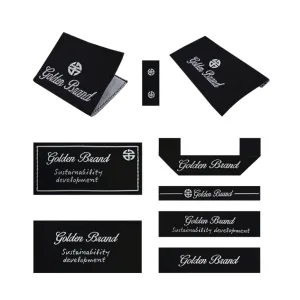
Manufacturing Process
- Weaving Technique: Woven labels are created by weaving threads together to form the design, text, and logo directly into the fabric using a loom.
- Material: Typically made from high-quality threads such as polyester, cotton, or a blend.
Appearance
- Detail and Clarity: Woven labels provide excellent detail and clarity, suitable for intricate designs, logos, and text.
- Texture: They have a soft and smooth texture. The finish can be matte or shiny depending on the thread used.
- Colors: Multiple thread colors can be woven together to create vibrant and intricate designs.
Durability
- Wear and Tear: Extremely durable as the design is woven into the fabric. They can withstand repeated washing, drying, and heavy use without fading or fraying.
- Longevity: Highly durable with a long lifespan, maintaining appearance and readability over time.
Applications
- High-Quality Appearance: Ideal for high-end products where a professional and high-quality look is essential.
- Permanent Use: Suitable for long-term use and items that require a durable label.
- Common Uses: Used for branding labels, size labels, and care labels on high-quality garments, accessories, home textiles, and more.
Satin Labels
Manufacturing Process
- Printing Technique: Satin labels are typically created by printing the design, text, and logo onto a satin ribbon or fabric using screen printing, digital printing, or thermal printing methods.
- Material: Made from satin, which is a smooth, glossy fabric that can be made from silk, polyester, or a blend.
Appearance
- Detail and Clarity: Satin labels offer high detail and clarity for designs and text, though the printing method can affect the level of detail achievable.
- Texture: They have a smooth and glossy texture, providing a luxurious feel.
- Colors: Satin labels can have a rich, glossy color, but the design is limited to the colors that can be printed onto the satin fabric.
Durability
- Wear and Tear: Less durable than woven labels. The printed design may fade, peel, or crack over time with repeated washing and use.
- Longevity: While satin fabric itself can be durable, the printed design’s longevity is generally lower compared to woven labels.
Applications
- Luxurious Appearance: Ideal for products where a luxurious and elegant look is desired.
- Temporary or Low-Wear Use: Suitable for items that do not require frequent washing or are used less frequently.
- Common Uses: Often used for branding labels, care labels, and size labels on high-end garments, lingerie, bridal wear, and special occasion clothing.
Summary
| Feature | Woven Labels | Satin Labels |
|---|---|---|
| Manufacturing | Weaving threads into fabric | Printing on satin fabric |
| Material | High-quality threads (polyester, cotton, blend) | Satin fabric (silk, polyester, blend) |
| Detail | High detail, suitable for intricate designs | High detail, depending on printing method |
| Durability | Extremely durable, long-lasting | Less durable, printed design may fade or peel |
| Texture | Soft and smooth, matte or shiny finish | Smooth and glossy, luxurious feel |
| Colors | Multiple thread colors, vibrant designs | Rich, glossy colors, limited by printing |
| Cost | Higher initial cost but long-term value | Generally lower cost, luxurious appearance |
| Applications | High-end products, permanent branding | High-end garments, lingerie, special occasion |
In conclusion, woven labels are more durable and suitable for high-quality, long-term applications, while satin labels provide a luxurious and elegant appearance, making them ideal for special occasion garments and products where a high-end look is important but extreme durability is not as critical.