
When it comes to custom woven labels, the choice of material plays a decisive role in the final product’s quality, appearance, and user experience. Each product has specific requirements, and matching the right woven label material to your product’s characteristics is key to maximizing the brand identification and decorative functions of the label. In this article, we will delve into the common woven label materials and their suitability for different product scenarios.
1. Cotton Woven Labels
Material Features
Cotton woven labels are renowned for their soft, skin-friendly texture. Cotton is breathable, allowing the skin to stay cool and comfortable, making it ideal for intimate clothing. Additionally, cotton is a natural, eco-friendly fiber, ensuring it is gentle on the skin and meeting the growing demand for green products. When dyed, cotton labels offer even color distribution and a natural, soft finish, producing rich and nuanced color layers.
Ideal Products
Due to its softness and skin-friendliness, cotton woven labels are particularly suitable for intimate apparel such as underwear, shirts, and baby clothing. Cotton labels do not irritate the skin, offering a comfortable wearing experience. For baby clothing, the natural, eco-friendly nature of cotton ensures safety for delicate skin. Moreover, cotton woven labels are also frequently used in home textile products like bedding and towels, adding a warm, cozy touch to home living.
2. Polyester Woven Labels
Material Features
Polyester is a synthetic fiber known for its high strength and excellent durability. Polyester labels maintain their shape and integrity over time, even after repeated wear and washing. With high color fastness, the colors of polyester labels remain vibrant and resistant to fading. Moreover, polyester is cost-effective, allowing businesses to balance quality with budget.
Ideal Products
Given its durability and shape retention, polyester woven labels are widely used in various apparel products, especially in activewear, outdoor clothing, and work uniforms. Activewear often endures frequent friction and stretching, making polyester a durable option. Outdoor clothing, exposed to harsh environmental conditions, benefits from polyester’s abrasion resistance and color stability. Additionally, work uniforms, which require durability and cost-efficiency, are well-suited for polyester woven labels. Polyester labels are also commonly used in products like bags and backpacks, where long-term use and appearance retention are essential.
3. Nylon Woven Labels
Material Features
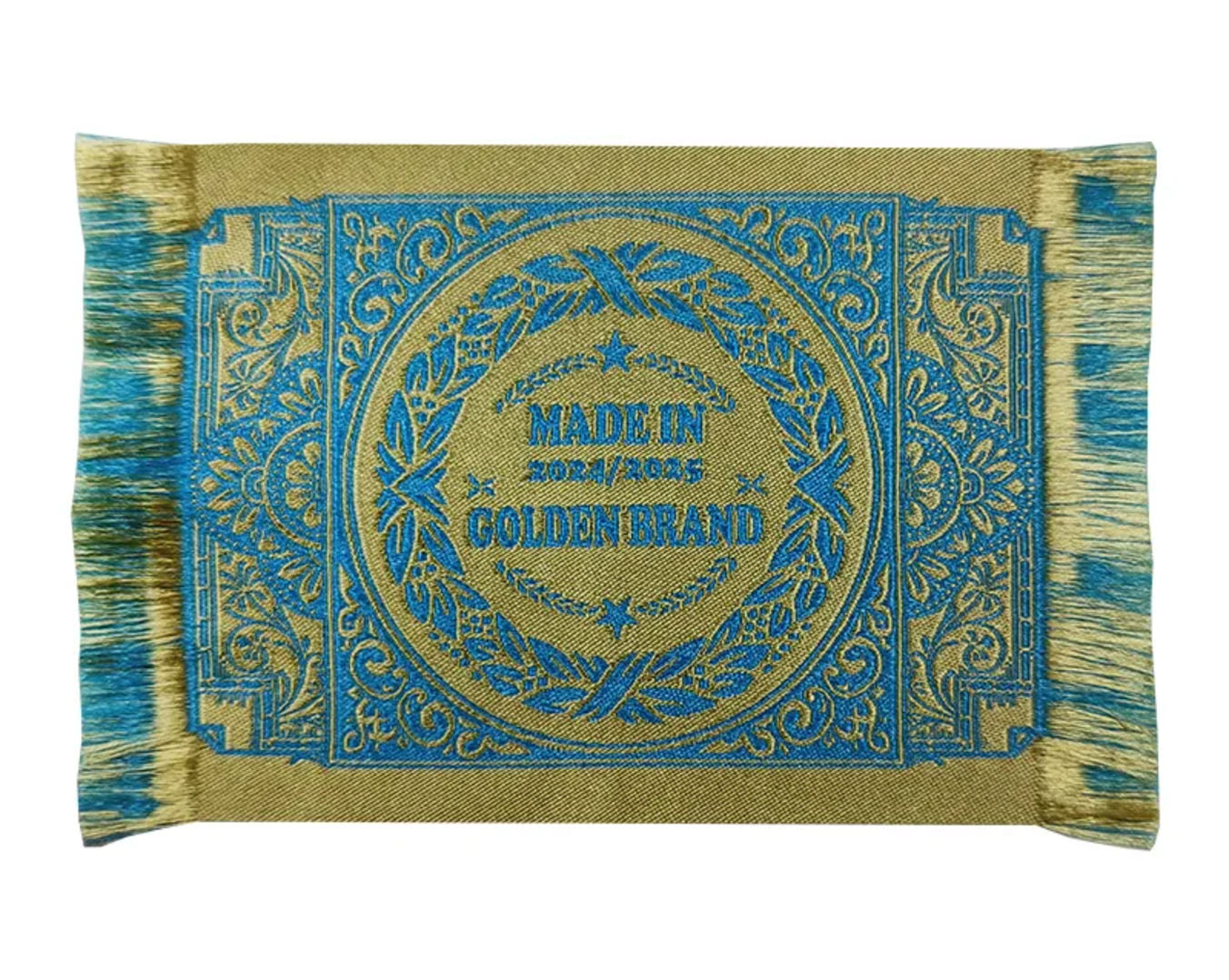
Nylon woven labels are exceptionally durable, with a strength superior to polyester. They also feature excellent elasticity, allowing them to stretch without breaking, and have great recovery properties. Nylon labels have a natural sheen that gives them a sophisticated, high-end look, elevating the overall appeal of the product.
Ideal Products
Nylon woven labels are ideal for high-end fashion brands that emphasize quality and aesthetics. Their glossy finish adds a luxurious feel to garments, perfectly aligning with a premium brand image. For functional apparel, such as ski jackets or mountaineering outfits, nylon woven labels are favored due to their toughness and durability in extreme conditions. Furthermore, nylon woven labels work well with leather products such as high-end handbags and shoes, complementing the leather’s texture and enhancing the overall quality perception.
4. Other Woven Label Materials
Apart from the three common materials mentioned above, there are other special woven label materials that are used for specific purposes:
- Silk Woven Labels: Silk labels are smooth, soft, and glossy, making them perfect for luxurious garments such as high-end dresses, evening gowns, or traditional garments like qipaos. Silk labels exude elegance and enhance the perceived value of premium products.
- Non-Woven Fabric Labels: Non-woven fabric labels are lightweight, cost-effective, and often used for disposable products or products where cost is a major factor. Examples include hotel amenities, disposable apparel, and basic packaging for fast-moving consumer goods (FMCG).
5. How to Choose the Right Woven Label Material for Your Product
When selecting the right woven label material, businesses must consider several factors such as product positioning, target audience, usage scenario, and budget. Only by choosing the appropriate material can the woven label seamlessly integrate with the product, enhance its value, and reinforce the brand image.
Key Considerations:
- Product Type: Understand whether the product is high-end or functional, intimate or casual, and choose a label material that complements these characteristics.
- Target Audience: Know who your customers are and what they expect in terms of comfort, durability, and luxury.
- Usage Conditions: Assess the product’s exposure to wear, weather conditions, or frequent washing to select a durable material.
- Budget: Balance the cost of the material with the quality you wish to deliver, ensuring a cost-effective solution for mass production without compromising on the brand’s reputation.
6. Conclusion
By selecting the right woven label material based on the unique characteristics of your product, you can greatly enhance its appeal, functionality, and marketability. Whether you’re crafting high-end fashion pieces, durable outdoor gear, or cozy home textiles, understanding the properties of various woven label materials will help you make an informed decision that complements your brand identity and product vision.
At Guangdong Golden Brand Technology Co., Ltd., we specialize in providing a wide range of custom woven labels, tailored to suit every product type and requirement. Whether you’re looking for soft cotton labels for intimate wear, durable polyester labels for activewear, or premium nylon labels for luxury goods, our expert team can guide you through the selection process to create the perfect label for your product.
Reach out to us today to discuss your woven label needs and let us help you elevate your brand identity with the finest materials and craftsmanship.